Wednesday, November 12, 2014

What a great idea! Thanks, Joan and the Ashlawn Elementary Community. Hope this effort grows.

Wednesday, November 12 2014

Ashlawn Elementary grows its own lettuce for lunch

 November 11 at 4:35 PM  
Seven-year-old Laura Sawicki inspects her salad cautiously. 
“I don’t really like to eat vegetables at home,” the first-grader confides. 
But these are not just any vegetables. The lettuce for Laura’s salad comes from her school’s front yard and from the yards of more than 100 people living around Ashlawn Elementary in Arlington, Virginia. She and her classmates helped plant the seeds, monitored their growth and made sure they got enough water and sunlight. 
Knowing all the work that went into her salad, Laura spears a lettuce leaf with her spork and takes a tentative bite. 
The verdict? “It’s a little chewy, but not that chewy. It tastes really good.” 
Laura munches on a second sporkful of salad.
“And I like it because my school helped grow it,” she adds. 
Those are exactly the words Joan Horwitt wants to hear. She’s the mastermind behind the Lawns 2 Lettuce 4 Lunch program, which coordinates the planting of thousands of lettuce plants in yards around the neighborhood each spring and fall. Each grade at Ashlawn has a different responsibility in caring for the plants: For example, second-graders charted the growth of the lettuce and fourth-graders prepared the soil. 
Horwitt started the program four years ago hoping to convince kids such as Laura that healthful foods can be both tasty and fun. 
“When you’ve seen the process from start to finish, it makes an impression on you,” Horwitt says. “There’s a story connected with the food, something that makes it special, so you’re more willing to try it.”
In the Ashlawn cafeteria, students, teachers and volunteers are celebrating the end of two months of hard work with a “salad fiesta.” All the lettuce grown this fall — more than 50 pounds of leaves — has been washed, chopped and mixed with 12 toppings and a dressing chosen by Ashlawn students. The bounty could feed more than 700 people. 
Some people eat more than others. During the fourth-graders’ lunch period, 9-year-olds Siddharth Advani and Jason Brown-Ford compete to see who can eat the most salad. 
Siddharth likes nearly every part of the Lawns 2 Lettuce 4 Lunch program: gardening, harvesting, learning about soil and rainfall. (“Everything except for the bugs,” he says.) But the salad fiesta is what he looks forward to most. 
“This is so delicious,” he says, then waves down a volunteer to ask for a fifth serving.
Given the program’s success at Ashlawn, Horwitt would like to see other Arlington schools implement it. She dreams of a day when every cafeteria gets lettuce from a garden tended by its own students. 
Third-grader Wyatt Hogan says kids at other schools would probably be on board with the idea. “I really like nature and helping things grow,” he says. “I think other kids would like it, too.”
Fancy Vinaigrette Salad Dressing
Feeling hungry for some salad? Try it with this “fancy vinaigrette,” created by Ashlawn Elementary neighbor Ron Battocchi and selected by students as their favorite salad dressing. Refrigerate the leftover dressing in an airtight container for up to two weeks. Shake well before using.
SERVINGS
1 cup
INGREDIENTS
3 / cup extra-virgin olive oil
1 / cup red wine vinegar
1 clove garlic, pressed
1 tablespoon Dijon-style mustard
Pinch of oregano
Salt and pepper, to taste
STEPS
Whisk ingredients in a bowl until thoroughly combined. Using a ladle or a large spoon, put a small amount onto an individual serving of salad.
0
 
SHOW COMMENTS

Monday, October 6, 2014

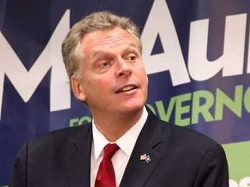
Urge Governor McAuliffe to Support EPA's Clean Power Plan NOW! Here's how to let him know!


Gov. McAuliffe: Time to Get Real about Reducing Carbon Pollution

McAuliffe.jpg
Share this page on FacebookShare this page on TwitterShare this page with other services
Even if you didn't make it to NYC for the People's Climate March, you couldn't escape the coverage. 400,000 people in the streets of Manhattan demanding action on climate change.  It was exhilarating!
And 1,000 of us made the long trip from Virginia.  Over 700 boarded 13 buses from across Virginia for the long to NYC. Others came by car and train. Even Governor McAuliffe, who was in NYC for another event, stopped by the March.  
It's great that he joined the March, but those good intentions need to translate into real policies on the ground that reduce carbon pollution in Virginia. Urge Governor McAuliffe to Support EPA's Clean Power Plan NOW!
  1. Complete the form below with your information.
  2. Personalize your message if you wish.
  3. Click the Send Your Message button to submit your message to Governor McAuliffe.

Recipients

  • Your Governor

Contact

*Required fields

Message

Next Step after People's Climate March: Support EPA's Clean Power Plan
Dear [Decision Maker],
Last weekend 1,000 Virginians boarded buses, cars and trains to join the People's Climate March in New York City. 400,000 marchers came to NYC from across the country and the world. I'm pleased that you were able to be a part of that historic event.


I urge you to actively support the EPA's Clean Power Plan and provide the leadership to get that plan implemented in Virginia.

Thank you.
Sincerely,
[Your Name]
[Your Address]
[City, State ZIP]

Sunday, September 28, 2014

A Group Shout on Climate Change
SEPT. 27, 2014
          
The marchers and mayors, the ministers and presidents, have come and gone. So what is the verdict on Climate Week, the summit meeting on global warming convened by the United Nations secretary general, Ban Ki-moon, in New York?
The meeting was not intended to reach a global agreement or to extract tangible commitments from individual nations to reduce the greenhouse gases that are changing the world’s ecosystems and could well spin out of control. Its purpose was to build momentum for a new global deal to be completed in December 2015, in Paris.
In that respect, it clearly moved the ball forward, not so much in the official speeches but on the streets and in the meeting rooms where corporate leaders, investors, Silicon Valley entrepreneurs and state and local officials pressed the case for stronger action.
It was important to put climate change back on the radar screen of world leaders, whose last effort to strike a deal, in Copenhagen five years ago, ended in acrimonious disaster. President Obama, for one, was as eloquent as he has ever been on the subject: “For all the immediate challenges that we gather to address this week — terrorism, instability, inequality, disease — there’s one issue that will define the contours of this century more dramatically than any other, and that is the urgent and growing threat of a changing climate.”
But most of the positive energy at this gathering came from people closer to the ground, like the 300,000 activists who marched last Sunday. They included mayors like New York’s Michael Bloomberg and his successor, Bill de Blasio, who both spoke of the critical role that cities can play in reducing emissions. They included governors like California’s Jerry Brown, who is justly proud of his state’s pathbreaking efforts to control automobile and power plant pollution. And they included institutions like Bank of America, which said it would invest in renewable energy, and companies like Kellogg and Nestle, which pledged to help stem the destruction of tropical forests by changing the way they buy commodities like soybeans and palm oil.
Underlying all these declarations was a palpable conviction that tackling climate change could be an opportunity and not a burden, that the way to approach the task of harnessing greenhouse gas emissions was not to ask how much it would cost but how much nations stood to gain by investing in new technologies and energy efficiency.
This burst of activity comes at a crucial time. A tracking initiative called the Global Carbon Project recently reported that greenhouse gas emissions jumped 2.3 percent in 2013, mainly because of big increases in China and India. This means it is becoming increasingly difficult to limit global warming to an upper boundary of 3.6 degrees Fahrenheit above preindustrial levels. Beyond that point, scientists say, a world already suffering from disappearing glaciers, rising seas and persistent droughts could face even more alarming consequences.
Avoiding such a fate is going to require a revolution in the way the world produces and consumes energy, which clearly has to involve national governments, no matter how much commitment there is on the streets and in the boardrooms. The odds are long that a legally binding treaty will emerge from Paris. Congress is unlikely to ratify one anyway. The smart money now is on a softer agreement that brings all the big polluters on board with national emissions caps, and there are reasons for hope that this can be done.

Mr. Obama is in a much stronger leadership position than he was at Copenhagen, having engineered a huge increase in automobile fuel efficiency and proposed rules that will greatly reduce the United States’ reliance on dirty coal. The Chinese, in part because their own air is so dirty, have been investing heavily in alternative energy sources like wind and solar, and they are giving serious consideration to a national cap on coal consumption. The cooperation of these two countries could by itself create the conditions for a breakthrough agreement. But what might really do the trick — if Climate Week is any guide — is the emergence of a growing bottom-up movement for change.